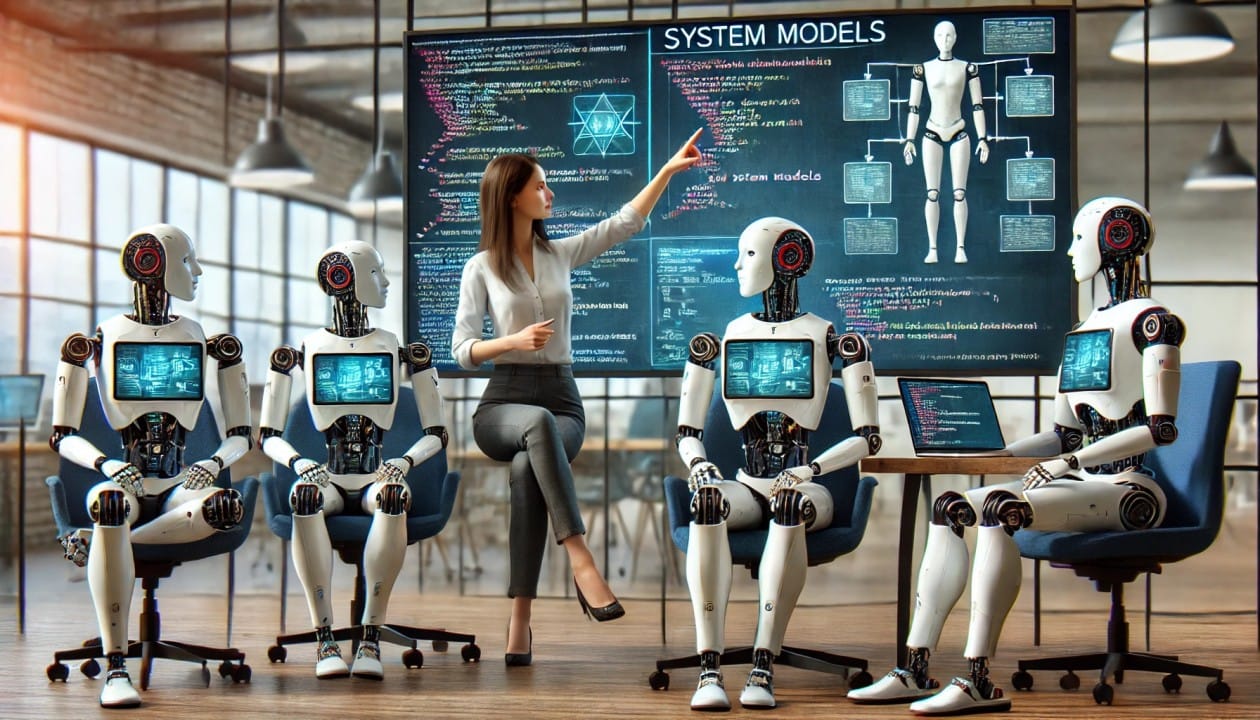
Traditionally, ‘high-code’ platforms, known for their flexibility and robustness, have been accessible mainly to those with sophisticated requirements and access to substantial resources and software programming expertise. These platforms provide a high degree of customisation, enabling businesses to tailor solutions precisely to their needs. However, the expertise required to harness their full potential and maintain them has often been a barrier.
Enter AI. Recent advancements in artificial intelligence have dramatically lowered these barriers. AI-driven tools and platforms are now capable of assisting in writing complex code, automating repetitive tasks, and even predicting and resolving bugs before they become issues. This has democratised access to high-code platforms, making them viable for businesses without a legion of highly skilled developers.
AI delivers remarkable speed and accuracy when guided by a human. You will not be bound by ‘do we have the in-country skills for X programming language or platform’. You tell AI what you need in which programming language and voilà — it’s there. This shift not only reduces operational costs but also accelerates development timelines and improves the quality, security and effectiveness of the software.
The Power of Open Source and the Circular Software Economy
The open-source movement has been gaining momentum for years, and its impact is now more profound than ever. In the open-source world, as opposed to the commercial world, initiatives are not wasting time repeating work that has already been done — most probably fluently — by another project unless they are planning to make it better. Open-source software offers several key advantages over its commercial counterparts:
- Cost Efficiency: Open-source software is typically free to use, reducing the need for significant upfront investments and ongoing licensing fees. This cost efficiency allows businesses to allocate their resources more strategically.
- Flexibility and Customisation: Open-source platforms are highly customisable, allowing businesses to tailor solutions to their unique requirements. The absence of vendor lock-in means companies can modify and enhance the software as they see fit.
- Community Support and Innovation: Open-source projects benefit from a vibrant community of developers who continually improve and innovate. This collaborative environment helps open-source software remain at the cutting edge of technology.
Meta’s LLaMA 3.1: A Game-Changer in Open-Source AI
A prime example of the advancements in open-source AI is Meta’s LLaMA 3.1. This open-source language model matches the capabilities of some well-known commercial AI models. The availability of such powerful tools in the open-source domain is a testament to the shifting paradigm in software development.
LLaMA 3.1 enables businesses to leverage state-of-the-art AI capabilities without the associated costs of commercial solutions. It can be used for a wide range of applications, from natural language processing and customer service automation to data analysis and predictive modelling. The best part? It’s accessible to everyone, fostering innovation across industries and levelling the playing field.
The Future is Open Source
The future of software development is undeniably open-source and best-of-breed. With AI doing the heavy lifting for a fraction of the cost, businesses can now build and deploy sophisticated solutions without breaking the bank. This paradigm shift not only makes advanced technology more accessible but also drives innovation and competition in the market.
Originally published on LinkedIn.