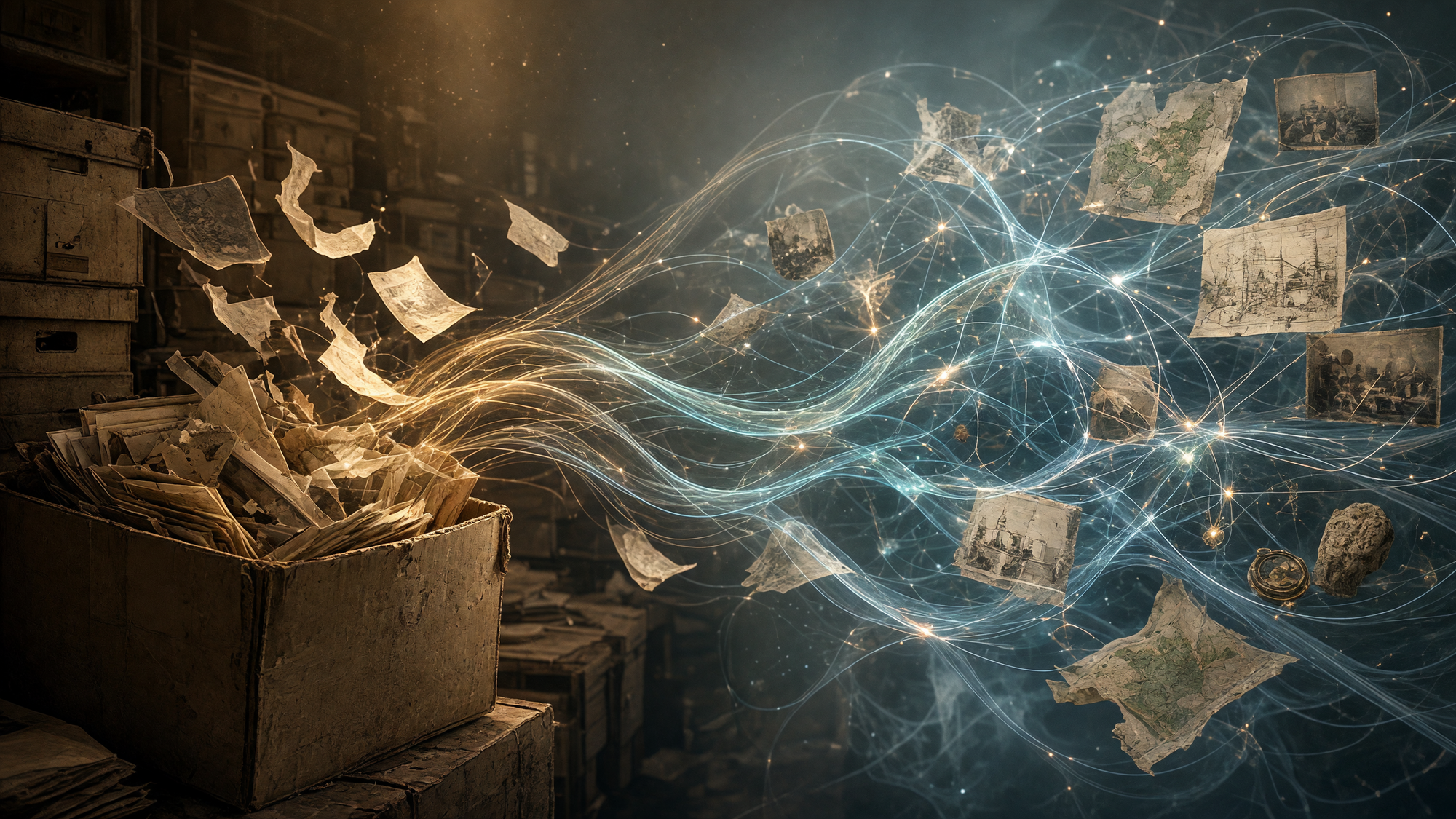
The transition from dusty archival boxes to digital databases was only the first step in preserving human history. The next, and arguably more complex, challenge is making sense of millions of disconnected digital records. Digital humanities researchers are now turning to natural language processing and machine learning to map out relationships between disparate historical artifacts, creating a living web of history that previously would have taken lifetimes to manually index.
The Smithsonian Institution, working in collaboration with the United States Library of Congress, is deploying AI tools to cross-reference vast collections tied to the American Revolution. The initiative, known as "Revolution Crossroads," was highlighted in fresh reporting this weekend. Since researchers began applying the models earlier this year, they have rapidly surfaced historical links that traditional cataloguing obscured. In one practical demonstration, the system successfully connected a physical silver creamer held in the National Museum of American History to a 1774 newspaper advertisement placed by the silversmith who originally crafted it.
Open-Source Stewardship
What sets this initiative apart from proprietary commercial development is its commitment to open-source stewardship. The Smithsonian’s Office of Digital and Innovation has hosted the project’s underlying data on the collaborative machine learning platform Hugging Face. By providing public access to integrated records, media, and metadata from national repositories, the institution is inviting independent developers and data scientists to build and refine custom models.
These assets are specifically optimised for digital humanities research, allowing the wider technological community to experiment with natural language processing tools tailored for archaic text and historical classification. The ultimate goal is to surface new stories about everyday citizens who shaped early communities, pushing the public record beyond the era's most prominent historical figures.
Relevance for Aotearoa
For cultural stewards in Aotearoa and the broader Asia-Pacific region, the Smithsonian’s technological pivot provides a highly relevant blueprint. National institutions such as Te Papa Tongarewa, Archives New Zealand, and the Alexander Turnbull Library act as the custodians for millions of texts, photographs, and taonga. The histories embedded within these collections are often deeply interconnected across different whānau, hapū, and early colonial records. However, they frequently remain physically and digitally fragmented.
Implementing similar machine learning models to traverse our local heritage infrastructure could dramatically accelerate historical research in New Zealand. By identifying patterns and people previously hidden within vast datasets, AI could help unearth lost connections and elevate the narratives of those who built early local communities.
From a stewardship perspective, this represents one of the most verifiable and well-supported benefits of modern computing: making overwhelming, unstructured datasets inherently navigable. Yet, applying these tools safely requires careful oversight. In Aotearoa, any algorithmic approach to heritage must respect Māori data sovereignty and ensure culturally sensitive items are handled with appropriate nuance. The objective is not to automate the archivist, but to hand researchers a profoundly more capable lens through which to view the past.
Sources
- Associated Press via US News: How the Smithsonian Is Using AI to Connect Artifacts From the American Revolution
- Smithsonian Office of Digital and Innovation: Can A.I. Help Historians Discover the Untold Stories of the American Revolution?
AI disclosure: Automated systems assisted with research and drafting. Gemini independently peer-reviewed this article before publication. Sources are linked for verification.