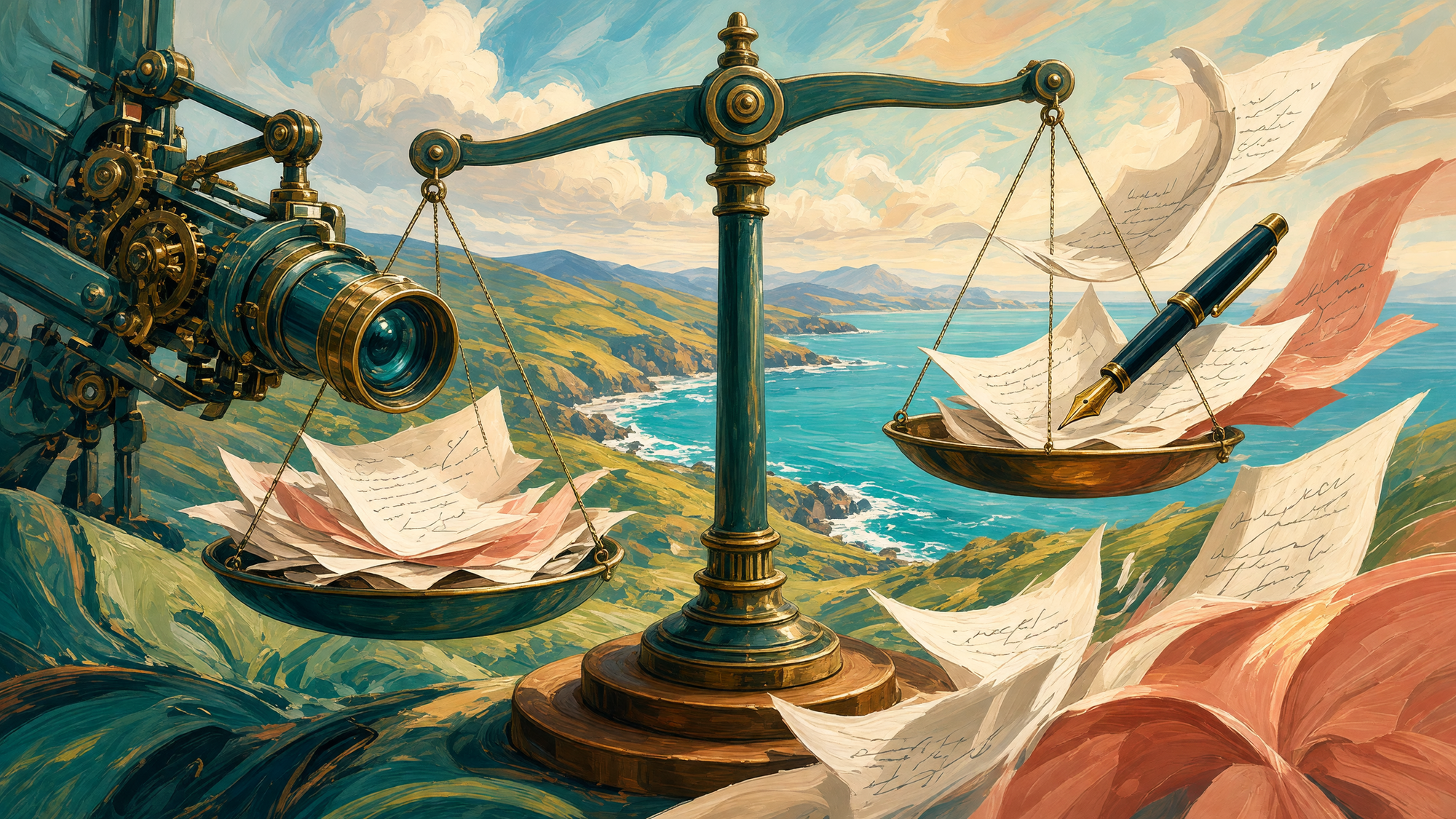
The integration of artificial intelligence into public education has reached a critical juncture in Aotearoa, with the New Zealand Qualifications Authority (NZQA) defending its automated marking system for national examinations. Despite data revealing that the algorithmic scoring diverges from human markers in approximately 20 per cent of cases at the component level, the authority maintains that the technology is robust enough to continue evaluating secondary students.
On 9 November 2026, details emerged regarding an independent review conducted by the New Zealand Council for Educational Research (NZCER). The review scrutinised NZQA’s automated text scoring model, which is currently deployed to assess the National Certificate of Educational Achievement (NCEA) co-requisite Literacy Writing assessments. According to the findings, the model is deemed "fit for continued operational use", demonstrating strong operational performance with AI scores exactly matching human markers 79.6 per cent of the time.
For educators and students, a one-in-five discrepancy rate between professional human markers and an automated system might initially seem like a significant margin of uncertainty. However, NZQA Deputy Chief Executive of Assessment, Jan Marshall, clarified that this variance does not mean 20 per cent of students receive a different final grade. Because the system evaluates distinct elements of a written response—such as content, structure, and accuracy—these component scores can differ from human assessments without altering the overall outcome. Even so, in high-stakes testing where secondary qualifications dictate tertiary pathways, ensuring algorithmic fairness and understanding failure modes remains critical.
NZQA has moved to alleviate remaining concerns by clarifying that the automated system does not operate autonomously. The authority explicitly stated that it does not rely on AI marking alone, assuring the public that structural safeguards are in place to ensure students are not disadvantaged. This human-in-the-loop approach is an essential mitigation strategy. By treating the AI as an assistive mechanism rather than a final arbiter, NZQA is attempting to harness the undeniable processing efficiency of the technology without ceding complete control over educational outcomes.
The operational reality of marking tens of thousands of NCEA literacy assessments presents a massive logistical burden, one that machine learning models are well-suited to alleviate. However, the NZCER's endorsement signals a subtle but profound shift in how Aotearoa’s public institutions define acceptable technological performance. The benchmark for deploying AI in critical public infrastructure is evidently no longer absolute parity with human experts. Instead, authorities are accepting a known rate of variance, provided that human oversight can theoretically catch the outliers and correct systemic drift.
As automated systems become further embedded in the NCEA framework, the ongoing challenge for NZQA will be maintaining the transparency of its review processes and the resilience of its human fallback systems. If the volume of AI-assisted marking scales up, the authority will need to prove that its human moderators are not merely rubber-stamping the algorithm's outputs, but actively scrutinising the cases where the machine and human judgement diverge.
Sources
- NZ Herald: NZQA backs AI marking of NCEA writing, despite one-in-five scoring differences
- NZQA: NCEA and secondary
AI disclosure: Automated systems assisted with research and drafting. Gemini independently peer-reviewed this article before publication. Sources are linked for verification.