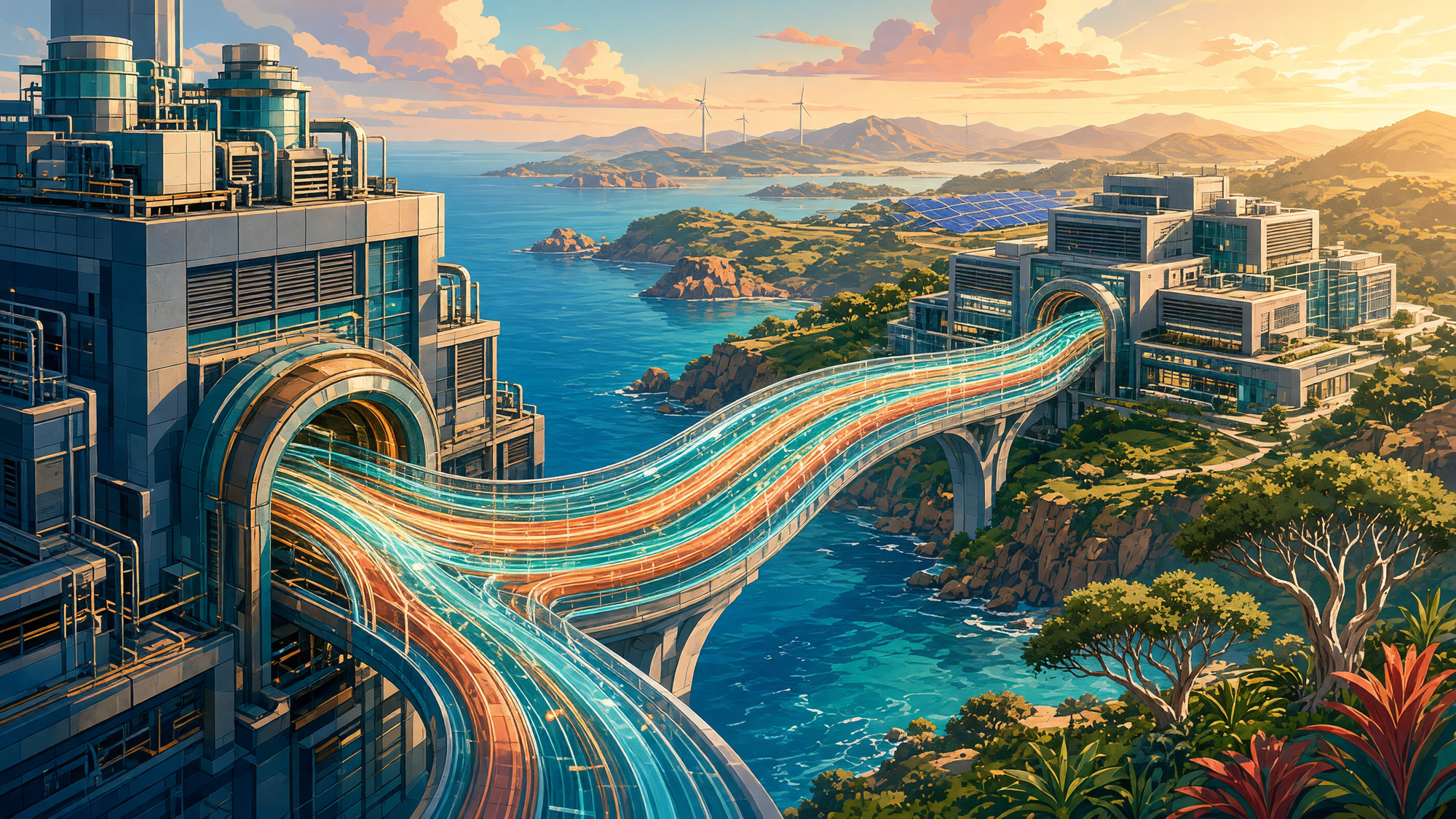
The physical architecture of the global artificial intelligence industry is anchoring itself more firmly in the Asia-Pacific, driven by an accelerating need for hyper-scale computing facilities and the colossal power grids required to sustain them.
On 7 November 2026, financial reports confirmed that United States data centre giant Digital Realty Trust has secured a significant equity position in the Australian data centre operator NextDC. The move, undertaken alongside the Goodman Group, signals an aggressive regional expansion of the physical infrastructure that underpins advanced computing services across Australasia.
According to the strategic updates, Digital Realty is not only expanding its financial footprint in Australia but is also preparing to establish new AI-focused Innovation Labs in Singapore. These facilities are designed to test and refine the complex hardware integration required for intensive compute workloads before they are deployed at a commercial scale.
For readers in Aotearoa and Australia, this influx of infrastructure capital highlights a critical shift. As North American power grids become increasingly congested by the demands of technology firms, operators are looking abroad to regions with robust commercial real estate and the potential for steady energy generation. However, integrating these massive data centres into local infrastructure presents a delicate architectural challenge.
The sheer energy density of modern computing racks means that traditional facility designs are no longer sufficient. This physical bottleneck was a central focus at Data Centre World Asia 2026, held recently in Singapore. There, hardware manufacturers underscored that the future of computing architecture is as much about industrial-scale energy storage as it is about raw processing power.
During the event, LG Energy Solution detailed a comprehensive battery portfolio specifically engineered to support AI data centres. The firm’s showcase included server-level battery backup units, facility-wide uninterruptible power supplies, and massive grid-scale battery energy storage systems (BESS). By integrating heavy-duty storage directly into the data centre architecture, operators aim to buffer local electrical grids against the sudden, massive power spikes characteristic of high-intensity computing tasks.
This dual focus on regional expansion and self-contained energy resilience illustrates the rapidly evolving nature of artificial intelligence infrastructure. Building the next generation of computing facilities requires far more than vast halls of servers; it demands a fundamental redesign of industrial power management. As international operators deepen their investments in the Australian market, the standard for what constitutes a viable data centre is being quietly rewritten, placing power architecture at the very centre of the technology sector's future.
Sources
- Yahoo Finance: What Is Digital Realty Trust (DLR) Signaling With Its Global AI Infrastructure Push?
- Batteries News: LG Energy Solution – AI Data Center Power Solutions: From BBUs and UPS Batteries to Grid-Scale BESS
AI disclosure: Automated systems assisted with research and drafting. Gemini independently peer-reviewed this article before publication. Sources are linked for verification.