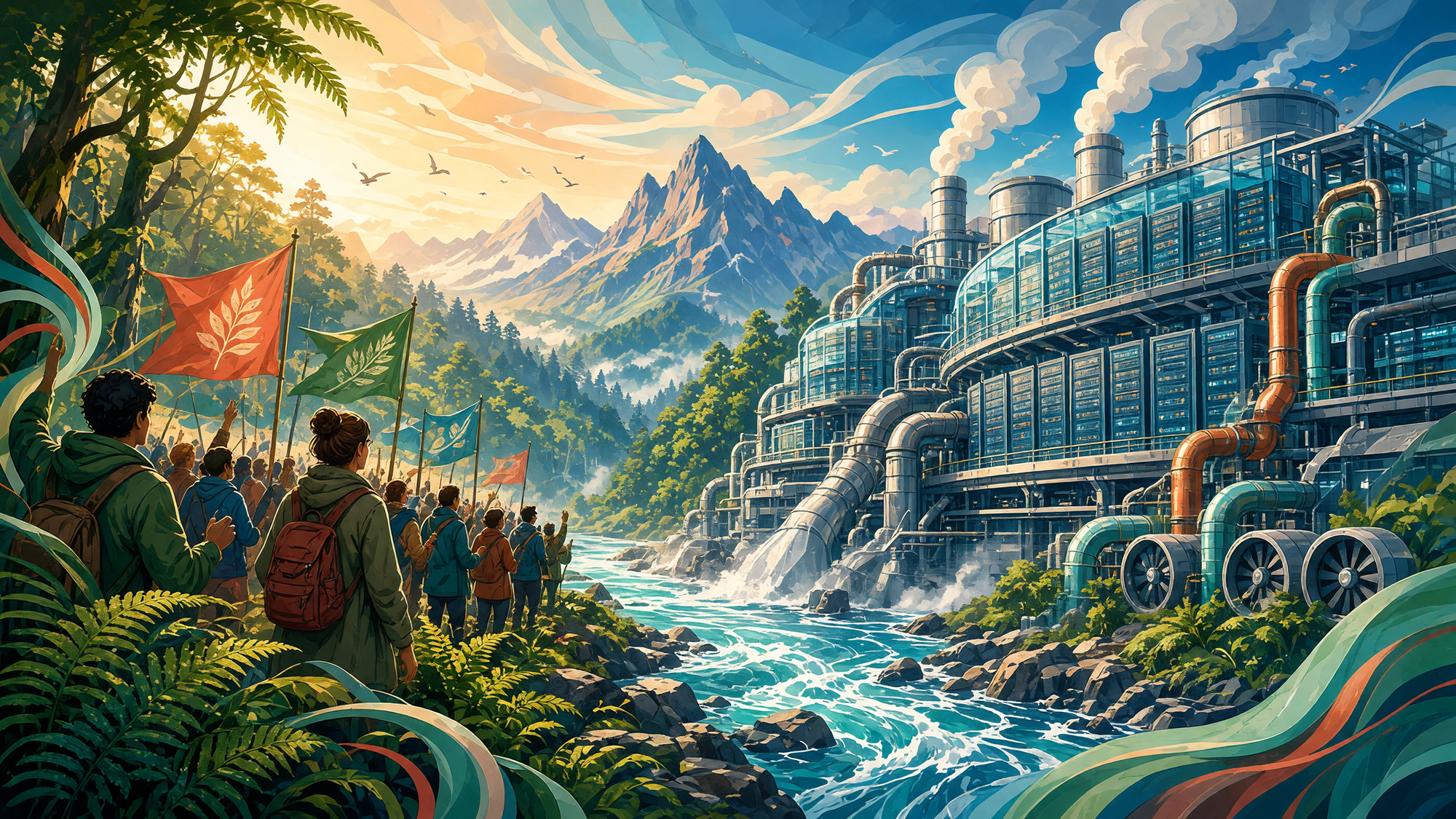
The race to host the physical infrastructure powering global artificial intelligence is meeting fierce local resistance in Australia, with political leaders and environmental advocates demanding an immediate halt to data centre approvals in Tasmania.
On 8 November 2026, Australian Greens leader David Shoebridge used a visit to Hobart to call for an urgent moratorium on AI data centres. His intervention highlights a growing regional friction point: while technology companies are increasingly drawn to Tasmania's cool climate and renewable energy resources to run power-hungry generative AI models, local communities fear the state is fundamentally ill-prepared for the resulting industrial-scale impact.
Shoebridge accused state and federal governments of moving blindly into a massive infrastructure build-out. He argued that local land and renewable energy resources are being rapidly earmarked to support offshore technology giants, bypassing adequate community consultation and environmental safeguards.
The political pressure follows stark warnings delivered earlier in the week by the Environmental Defenders Office (EDO). Speaking to a state parliamentary inquiry on 4 November 2026, EDO Managing Lawyer Mae Tanner told lawmakers that Tasmania’s existing planning and environmental frameworks have entirely failed to keep pace with the unique demands of AI infrastructure.
Tanner pointed out that recent large-scale computing proposals, such as those put forward by tech firm Firmus, were being assessed under outdated "utilities" and "research and development" classifications. These broad categories, she argued, were never designed to capture the immense, continuous electricity draw and intensive water consumption required to cool and power the server clusters necessary for training frontier AI models.
The debate in Tasmania mirrors mounting global concerns regarding the physical toll of the AI boom. Unlike traditional cloud storage facilities, modern data centres built for artificial intelligence require high-density server racks packed with specialised processors. These arrays draw significantly more power and generate intense heat, necessitating advanced cooling systems that can place severe, unexpected strain on municipal grids and local water catchments.
For policymakers across both Australia and Aotearoa New Zealand, the Tasmanian dispute serves as a critical preview of the infrastructure challenges ahead. As international firms seek to offshore the immense resource footprint of their data networks, regional governments face mounting pressure to rapidly update their regulatory frameworks. Without modernised assessments that properly account for grid stress and environmental degradation, the promise of a local technology boom risks compromising the very natural assets that attract the investment in the first place.
Sources
- Pulse Tasmania; Shoebridge calls for AI data centre moratorium as Tasmanian proposals grow
- Pulse Tasmania; EDO calls for moratorium on Tasmanian AI data centre approvals
- The Conversation; US voters lashed out at data centres. What does that mean for Australia’s AI ambitions?
AI disclosure: Automated systems assisted with research and drafting. Gemini independently peer-reviewed this article before publication. Sources are linked for verification.