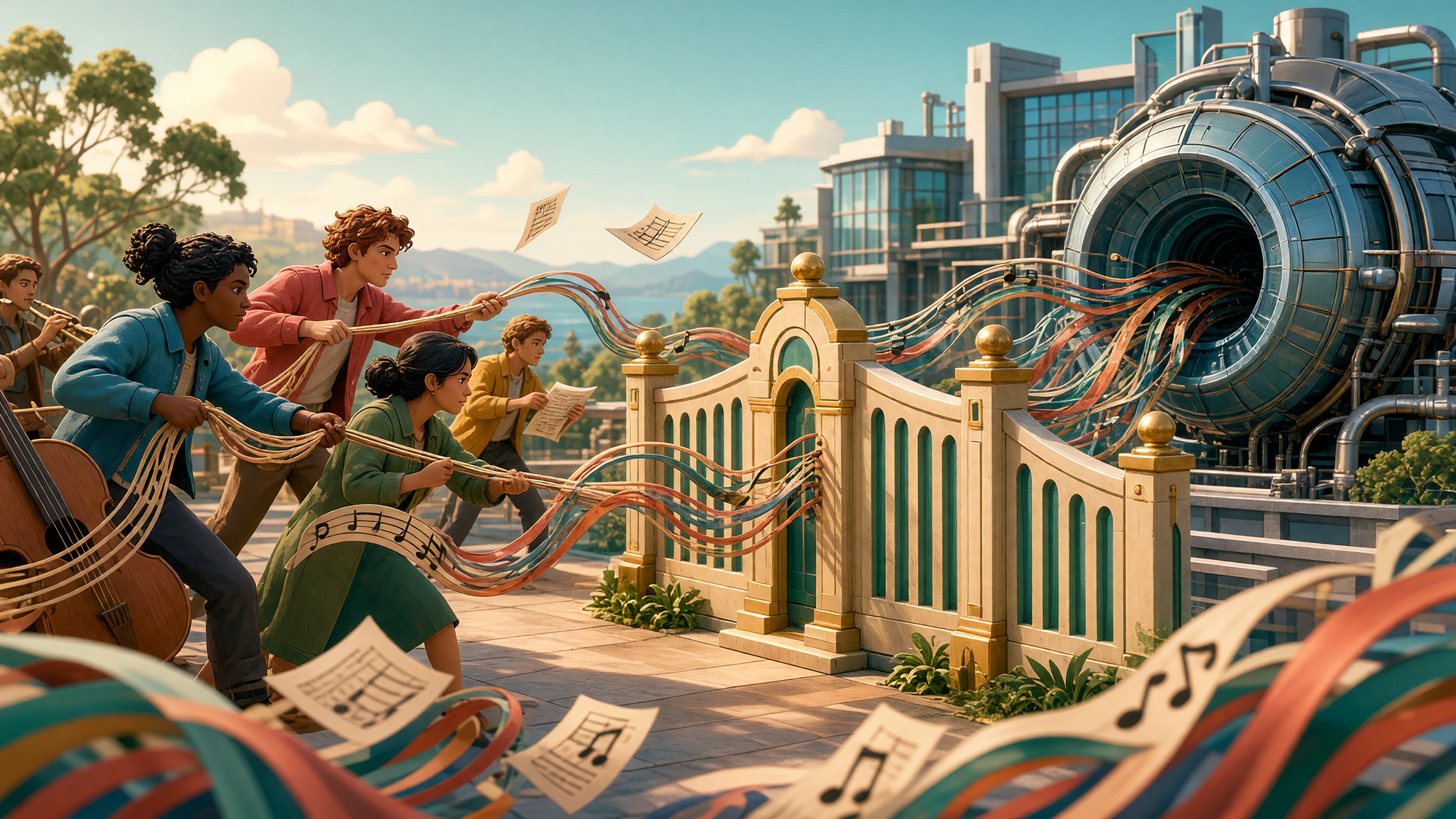
A formidable coalition of international music federations and prominent domestic composers has delivered a sharp warning to the Australian government, urging lawmakers to reject tech industry lobbying aimed at weakening copyright laws for artificial intelligence training.
On Sunday, 8 November 2026, representatives from the global creative sector articulated deep concerns over Canberra’s ongoing review of AI-related policy overhauls. Technology firms have increasingly pressured the Albanese government to introduce exemptions allowing generative AI models to scrape copyrighted material without prior consent or compensation.
The pushback is underscored by new, alarming practices emerging within the commercial music sector. According to reporting by the Australian Financial Review, session musicians are actively being pressured by commercial entities to physically "recreate" AI-generated tracks. Because fully AI-generated music currently lacks human authorship and cannot be copyrighted, these companies are allegedly using human musicians as a legal workaround to secure intellectual property rights over machine-designed melodies.
Antony Partos, the acclaimed Australian composer behind soundtracks for productions such as Redfern Now and The Slap, has publicly demanded that the government mandate retrospective payment frameworks for artists whose past works have already been absorbed into large language models without permission. He warned that relaxing legal protections would hollow out the domestic creative economy.
The domestic backlash aligns with intense international pressure. Victoria Oakley, Chief Executive of the International Federation of the Phonographic Industry (IFPI), warned that bowing to tech giants would spell "disaster for creativity." Oakley cautioned that loosening these guardrails would not only harm local artists but severely damage Australia's reputation as a safe market for international intellectual property.
For policymakers in Aotearoa New Zealand, the unfolding debate across the Tasman serves as a critical bellwether. Trans-Tasman regulatory alignment is often highly sought by both governments. Should Australia adopt a "safe harbour" or sweeping fair-use exemption for AI training, it could place immense pressure on Wellington to follow suit, risking the IP of New Zealand creators who frequently operate within the integrated Australasian market.
As artificial intelligence firms face mounting global scrutiny over their data acquisition methods, the Australian government's impending policy decision will likely establish a decisive precedent for sovereign copyright protection across the broader Asia-Pacific region.
Sources
- Australian Financial Review: Musicians pressed to recreate AI tracks so firms can secure copyright
- The Guardian: Weakening AI copyright law will spell ‘disaster for creativity’, global music body warns Albanese
- UA News / IFPI: IFPI warns Australia against weakening copyright for AI
AI disclosure: Automated systems assisted with research and drafting. Gemini independently peer-reviewed this article before publication. Sources are linked for verification.