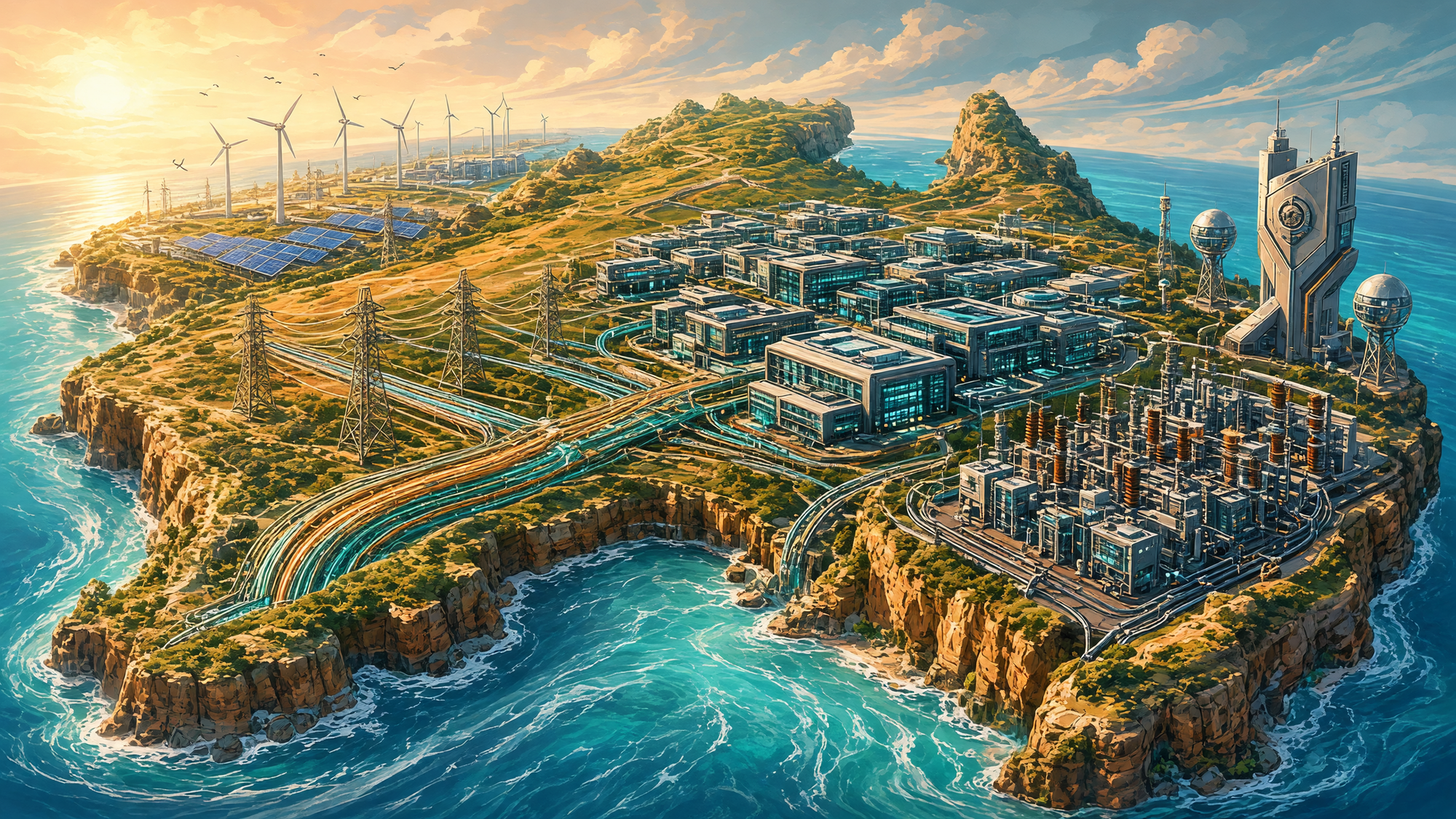
The physical footprint of the artificial intelligence boom is colliding with infrastructural realities across the Tasman, where a rapid expansion of data centres is straining Australian power networks and driving up regional construction costs.
As global technology companies aggressively scale their compute capacity to support generative and agentic AI models, the influx of capital has transformed from a purely technological pursuit into a macroeconomic challenge. According to a report published on 6 November 2026 by Proactive Investors, billions of dollars are currently being funnelled into AI infrastructure across Australia. While this investment signals a robust digital economy, the sheer scale and speed of the build-out are applying severe pressure to local power grids, construction material supply chains, and skilled labour markets.
This physical architecture bottleneck is particularly relevant for the broader Asia-Pacific region, including Aotearoa New Zealand, which is carefully navigating its own sovereign AI infrastructure strategies. The Australian experience serves as an immediate case study: importing and housing vast arrays of high-performance GPUs requires extensive environmental cooling and immense, continuous power draw. For policymakers and enterprise architects, the assumption that cloud capacity will simply scale to meet demand is being tested by hard physical constraints.
Compounding the logistical friction are newly articulated security concerns regarding the very infrastructure housing these models. Also on 6 November 2026, Australia's Critical Infrastructure Security Centre (CISC) released its 2026 Critical Infrastructure Annual Risk Review. The federal review explicitly identifies artificial intelligence as a growing threat multiplier for critical infrastructure security. As data centres become increasingly vital nodes in national security and economic stability, they present highly concentrated targets. The integration of AI into both the defensive posture of these facilities and the offensive toolkits of potential adversaries necessitates a fundamental rethink of how these massive compute environments are secured.
For technology leaders in Aotearoa, the developments in Australia underscore a vital lesson in AI architecture: the intelligence of a model is entirely tethered to the resilience of its physical host. Building sustainable AI capability is no longer merely a software engineering challenge; it is a complex infrastructure orchestration that must account for energy availability, macroeconomic inflation, and escalating cybersecurity risks.
As the race to deploy enterprise AI continues, the organisations that succeed will likely be those that treat data-centre architecture and energy procurement as core strategic capabilities, rather than outsourced afterthoughts.
Sources
- Proactive Investors: AI data-centre boom emerges as new inflation challenge for Australia
- Industrial Cyber: Australia’s 2026 risk review identifies AI as a growing threat multiplier for critical infrastructure security
AI disclosure: Automated systems assisted with research and drafting. Gemini independently peer-reviewed this article before publication. Sources are linked for verification.