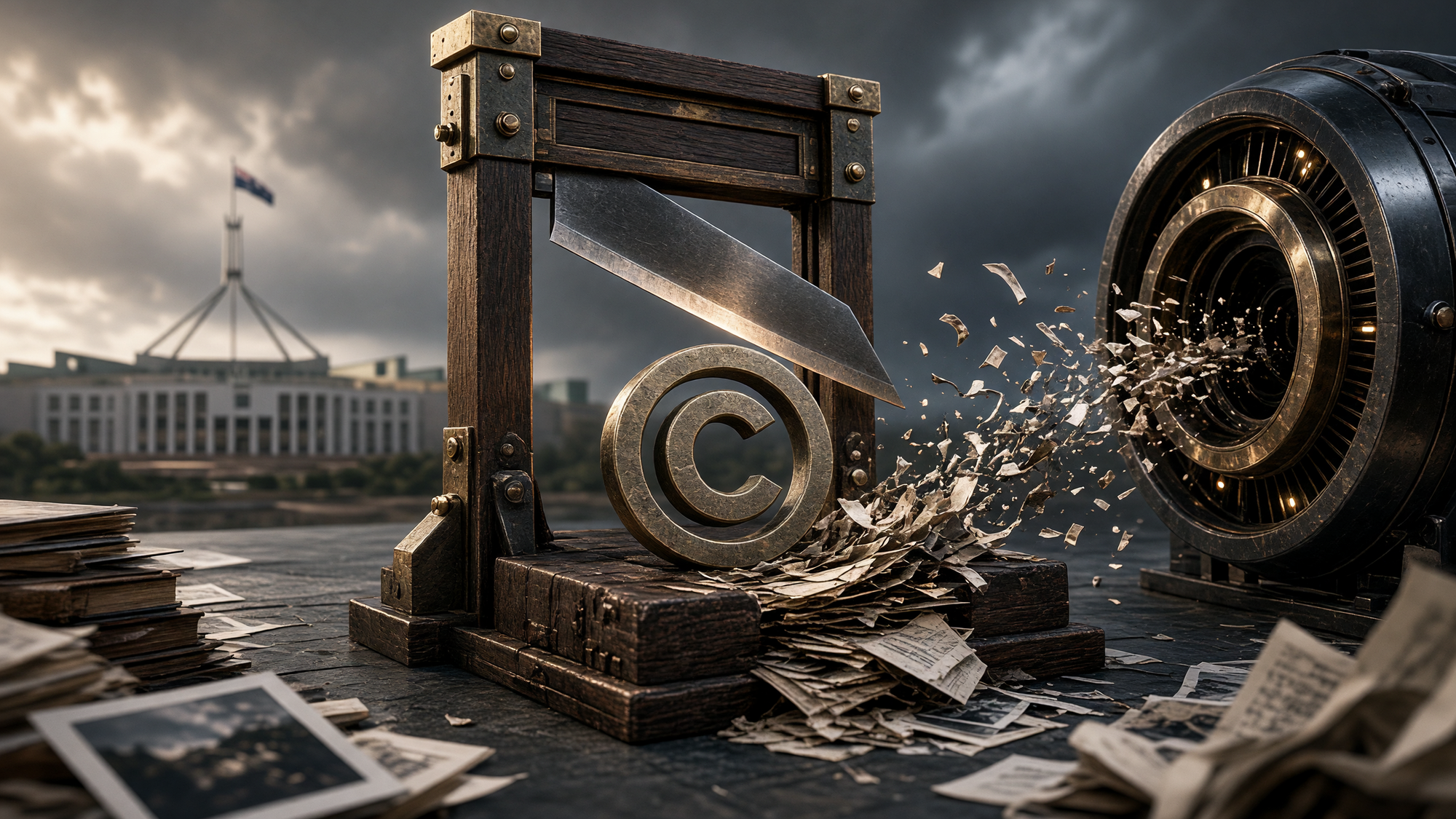
The insatiable appetite of generative artificial intelligence has brought the technology industry to a critical legal crossroads. Across the Tasman, the Australian government is currently weighing a controversial proposal that would allow AI companies to train their systems on copyrighted materials—including music, literature, and journalism—without seeking explicit permission from creators.
This policy debate highlights a persistent tension in the global AI race: the desire to foster domestic technological innovation versus protecting the fundamental rights of those whose labour fuels it. While Attorney General Michelle Rowland has stated the government remains committed to supporting creatives, the prospect of weakening copyright protections to accommodate data-hungry AI models has sparked fierce backlash.
The implications of such a legislative shift extend far beyond simple regulatory compliance; they strike at the constitutional foundation of property rights. Legal experts, including constitutional lawyer Anne Twomey, have cautioned that unilaterally stripping creators of their right to withhold or license their work could be interpreted as the government acquiring property without just terms. Such a move could potentially breach the Australian Constitution and expose the state to monumental compensation claims from rights holders worldwide.
The domestic creative industry has been unequivocal in its opposition. Annabelle Herd, chief executive of the Australian Recording Industry Association (ARIA), has bluntly likened unlicensed AI data scraping to the outright taking of personal property. Political resistance is also mounting, with Senator Ross Cadell and shadow attorney general Michaelia Cash warning that altering the law to favour tech companies could land the government in perilous legal and financial waters.
For Aotearoa and the wider Asia-Pacific, Australia’s impending decision serves as a bellwether. We are witnessing a concerted push by the AI sector to normalise the unlicensed ingestion of the internet, framing copyright as an outdated friction point rather than a necessary protection. The technology undeniably offers vast capabilities, from accelerating research to transforming how enterprises manage knowledge. However, safely harnessing artificial intelligence requires building systems on a foundation of trust, transparency, and fair compensation.
Treating human creative output as a free public resource for private, algorithmic profit is a systemic failure mode that will ultimately hollow out the very industries these models rely upon. If Australia caves to the pressure of the AI lobby, it risks setting a dangerous regional precedent. A thriving technological ecosystem does not need to be built on the uncompensated extraction of creative labour. As policymakers in Wellington watch closely, the lesson is clear: robust copyright protections are not a barrier to innovation, but a vital guardrail ensuring that the economic benefits of the AI transition are distributed equitably.
Sources
- The Guardian: Experts warn AI copyright changes could breach Australian constitution
- NewsBytes: Australia mulls allowing AI training on copyrighted works without permission
AI disclosure: Automated systems assisted with research and drafting. Gemini independently peer-reviewed this article before publication. Sources are linked for verification.