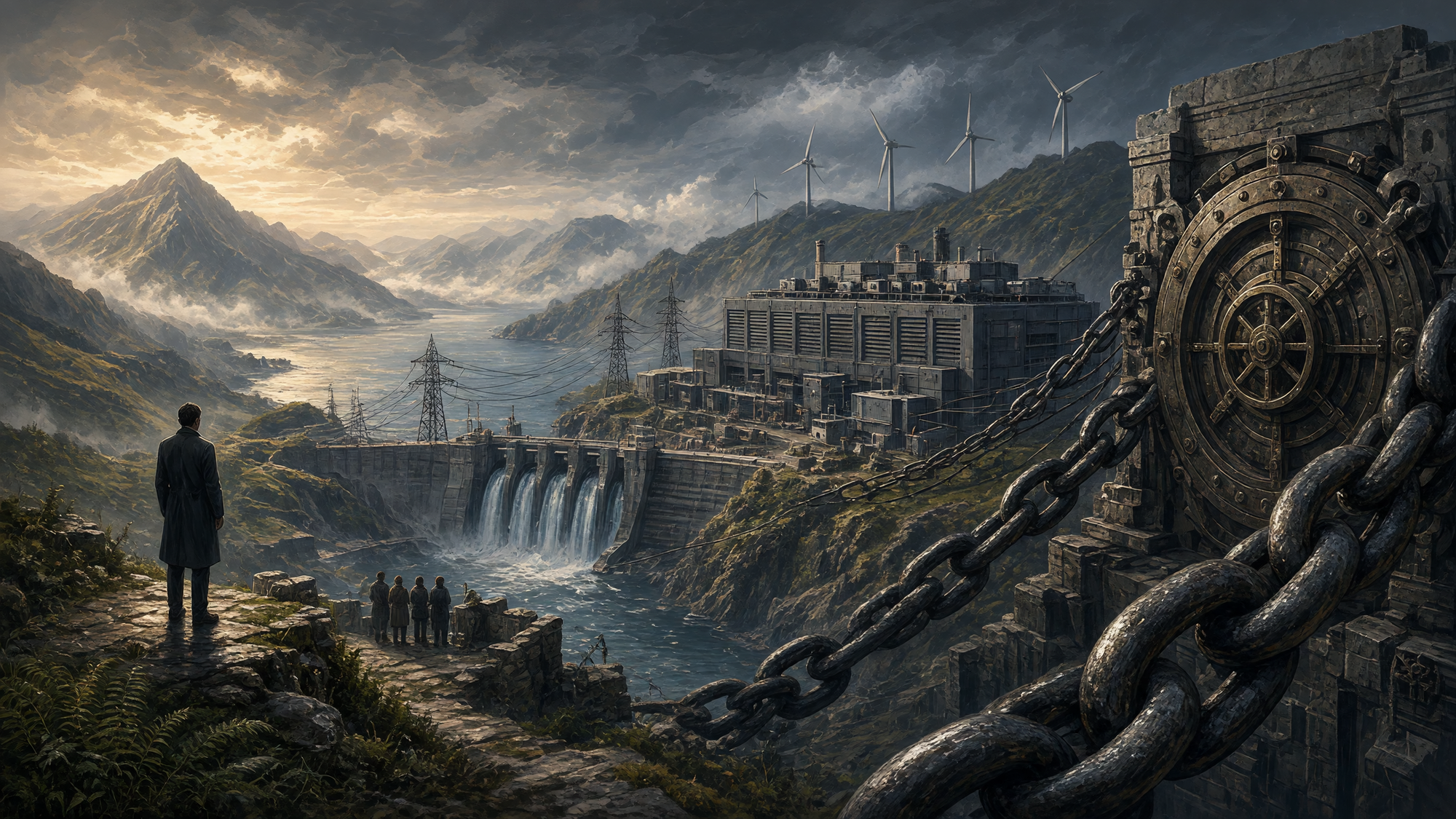
As artificial intelligence transitions from software hype to physical deployment, Aotearoa and Australia are facing a sharp reality check over the colossal infrastructure required to power it. The promise of advanced AI models offers undeniable economic and productivity benefits, yet the physical constraints of data centres—specifically power generation, capital risk, and social licence—are proving harder to solve than the algorithms themselves.
Speaking at the Institute of Finance Professionals New Zealand (INFINZ) 2026 conference this week, Morrison chief executive Paul Newfield outlined the scale of the impending global bottleneck. He warned that tripling the amount of energy consumed by existing data centres "just won't happen" without significant friction. Newfield predicted that the United States is on the brink of severe infrastructure and community constraints, which could force a massive migration of AI operations overseas.
"When the constraint becomes power ... the winners will be the markets that are power-rich," Newfield told delegates, suggesting New Zealand could capture a portion of this overflow if it gets its policy settings right. However, he also acknowledged mounting local protests against data centres, pointing to the delicate balance between capturing a high-tech windfall and preserving environmental resources.
Across the Tasman, the struggle to scale AI infrastructure is already yielding casualties and uncomfortable compromises. On Monday, Australian data centre provider Firmus Technologies was forced to pull its blockbuster ASX float. Despite early backing from global tech titans and plans to build facilities in Tasmania, domestic and international investors ultimately baulked at the venture's risk profile and steep valuation demands. The withdrawal highlights the hesitation of private capital to unconditionally fund untested local infrastructure plays.
Adding to the complexity is the staggering baseload power required by these facilities, which threatens to undermine regional decarbonisation targets. At the Energy & Climate Summit, Google confirmed it is actively searching for development sites in Australia but delivered a sobering message on power sources. Alexander Smith, Google's principal for global infrastructure and energy, admitted that the tech giant will need natural gas to reliably operate its facilities.
"Gas has a role to play," Smith said, noting that current renewable energy and battery storage technologies are "not yet at the stage where it can fully absorb that firming need and requirement."
For policy-makers and communities in Aotearoa and the broader Asia-Pacific, these developments serve as a critical warning. While there is a clear strategic imperative to host sovereign AI infrastructure—ensuring data security and technological independence—the rush to build must be tempered with robust stewardship. If we are to harness AI safely, we must first address the environmental impact of gas-firmed data centres and the risk of stranding capital in speculative mega-projects. The technology itself may be accelerating, but the physical world it relies upon remains bound by hard limits.
Sources
- NZ Herald: Morrison CEO Paul Newfield urges New Zealand to chase AI data centre opportunity
- ABC News: Australia's AI hopes take a hit as data centre provider Firmus float tanks
- Australian Financial Review: Google says it needs gas to power big AI data centres
AI disclosure: Automated systems assisted with research and drafting. Gemini independently peer-reviewed this article before publication. Sources are linked for verification.