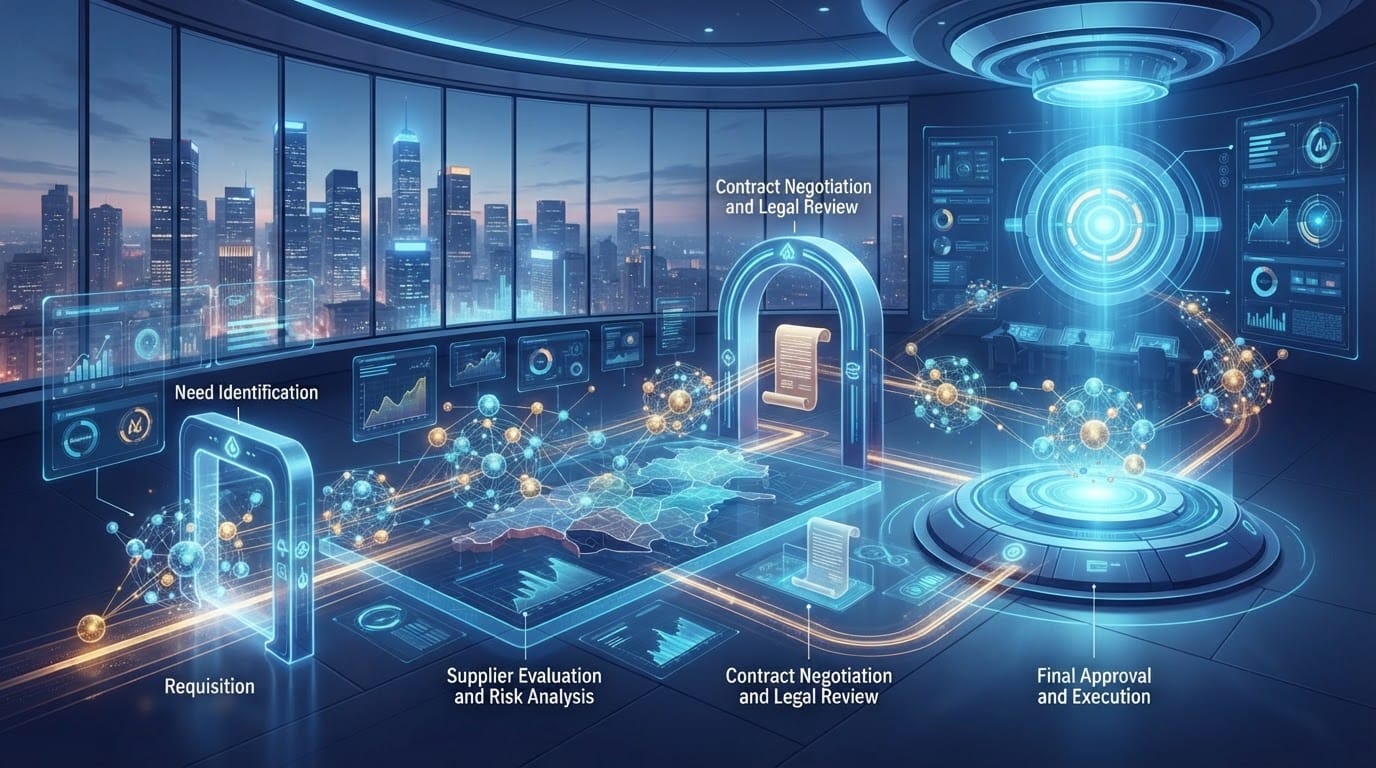
The traditional playbook for enterprise financial technology—stacking static software between an employee and a cumbersome business process—is beginning to fracture under the arrival of agentic artificial intelligence.
A newly released white paper by supply chain consultancy Inverto warns that the procurement infrastructure across the financial services sector is struggling to keep pace with systems that act autonomously and constantly evolve. The paper argues that standard procurement models, which are built around static software, fixed requirements, and one-off contracts, are poorly suited to the realities of agentic workflows.
The commercial incentives to solve this mismatch are immense. The analysis estimates that financial institutions moving from task-level automation to agent-based operations could achieve cost reductions of 30 to 40 per cent, alongside profitability gains of up to 30 per cent by 2030. However, capturing these gains requires a complete rewrite of how technology is sourced and governed.
According to the findings, the primary barrier is the speed of the AI development cycle. Traditional procurement processes can take months to define specifications and finalise contracts. In contrast, AI systems often operate in rapid weekly iterations, meaning model behaviour, integration requirements, and security guardrails can change substantially between releases. Fixed scopes and budgets actively discourage the experimentation needed to refine these tools, while conventional agreements rarely reward vendors for improving performance post-implementation.
Data control remains one of the most critical pressure points. The paper cites a Stanford CodeX analysis revealing that 92 per cent of AI vendors claim data usage rights beyond what is necessary for service functionality, compared with 63 per cent for standard Software as a Service (SaaS) agreements. For financial institutions bound by strict privacy mandates, this creates a significant compliance hurdle.
This structural shift extends well beyond procurement into daily financial operations. Dave Ruda, vice president of product at Billtrust, recently noted that agentic systems are already dismantling the legacy architecture of enterprise payments. As agents become capable of retrieving data and interacting directly with payment infrastructure, the future of enterprise financial software may involve virtually no human interface at all. Instead, staff will transition into strategic oversight roles, managing exceptions rather than pushing individual transactions through digital portals.
For banks and financial service providers in Aotearoa and the broader Asia-Pacific region, the warning is timely. Local institutions are already navigating complex regulatory environments and heavy reliance on offshore cloud infrastructure. To deploy agentic AI at scale, regional banks cannot treat these systems as just another software subscription; they must redesign their sourcing, contracting, and governance models to safely manage continuous evolution.
AI disclosure: Automated systems assisted with research and drafting. Gemini independently peer-reviewed this article before publication. Sources are linked for verification.